
Range Extenders and the Methanol Opportunity
The X-Range powertrain family, honoured by Autocar’s oldest engineering award, is designed to extend battery-electric range via a small combustion engine — an architecture that is fuel-agnostic by design and therefore directly compatible with drop-in e-methanol blends.[2] On the maritime side, the same logic is already in production: Acta Marine took delivery of the Acta Aquarius, the fourth methanol dual-fuel CSOV from Tersan Shipyard, completing its offshore-wind newbuild programme in November 2026.[1] The parallel is instructive — in both sectors, methanol-ready combustion systems are being embedded into broader electrified architectures rather than replaced by them.
For road transport, honesty about energy efficiency is non-negotiable. The ICCT calculates that an e-fuel pathway delivers roughly 16% well-to-wheel efficiency versus 72% for a battery-electric vehicle — over four times more efficient. Peer-reviewed modelling by Ueckerdt et al. in Nature Climate Change (2021) puts the e-fuel figure closer to 10%. Range-extender engines mitigate but do not eliminate this penalty. The genuine case for methanol-based range extenders is therefore not efficiency parity with BEVs; it is operational continuity for the 1.4 billion combustion-platform vehicles already on the road, remote or off-grid duty cycles, and the long-haul heavy segments that batteries cannot yet serve. Where the efficiency objection loses force is in scenarios where the methanol is produced from geologically sourced natural hydrogen rather than grid electrolysis — no renewable electricity is consumed in production, so the per-kilometre electricity cost of the gap disappears.
AI-Driven Engine Calibration: Where the .ai Domain Earns Its Keep
The technical discipline that connects Horse Powertrain’s award to the methanol economy is real-time engine-management optimisation. Range-extender units running on e-methanol present a calibration surface that differs substantially from gasoline or diesel: methanol’s higher latent heat of vaporisation, octane rating (RON ~109), and stoichiometric air-fuel ratio (λ = 1 at 6.47:1) require dedicated combustion maps. AI-assisted dyno calibration — using Gaussian-process surrogate models or reinforcement-learning controllers — can compress the calibration cycle from months to weeks and extract 2–4 percentage points of additional brake thermal efficiency from the same hardware. For a 200 MW electrolyser programme such as the Siemens Energy project supplying a 66,000 t/yr e-SAF facility in Sweden, every efficiency point in the downstream combustion step changes the lifecycle carbon accounting. Digital twins of the engine, fed by on-board sensor telemetry and cloud inference, enable continuous optimisation post-deployment — a capability that justifies an AI-native editorial platform tracking this convergence.
Maritime Precedent, Road Transport Trajectory
The methanol dual-fuel CSOV delivered to Acta Marine represents the logical endpoint of the design philosophy Horse Powertrain is now applying to road powertrains: hybridise first, decarbonise the combustion fraction through fuel switching, and use digital control systems to close the efficiency gap. FuelEU Maritime’s 2% GHG intensity reduction mandate (2025) and its escalating trajectory to 80% by 2050 have forced shipowners to make exactly this calculation at scale. Road transport faces less immediate regulatory pressure, but the architecture — combustion-compatible, methanol-ready, electronically controlled — is transferable. The Sturmey Award signals that the engineering community recognises X-Range not as a rearguard action for internal combustion, but as a platform that can carry green fuels forward while battery infrastructure matures.
Sources
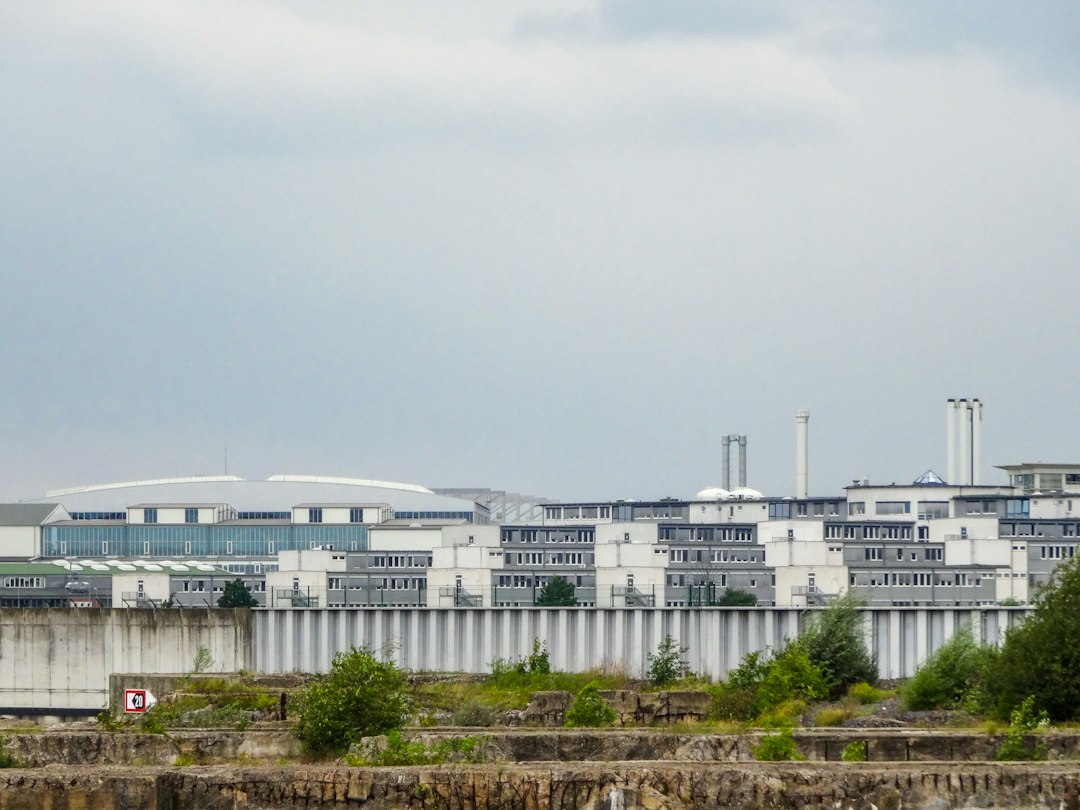
Featured image via Unsplash.
This is not an official site. It is published by a private company and does not emanate from any public authority, institutional programme, government department or research organisation. It represents none of them and speaks for none of them in any capacity.
Nature of the content. Articles are documentary summaries drawn from cited public sources. They may contain inaccuracies, omissions or information that has since become outdated. No financial, technical, legal or investment advice is provided.
Always verify against primary sources. For any information concerning a public programme, a regulation or an institutional project, only the publications of the competent authority are authoritative.
© 2026 BESS Energie SRL · BCE 0698.949.732 · info@bess.be




Leave a Reply