
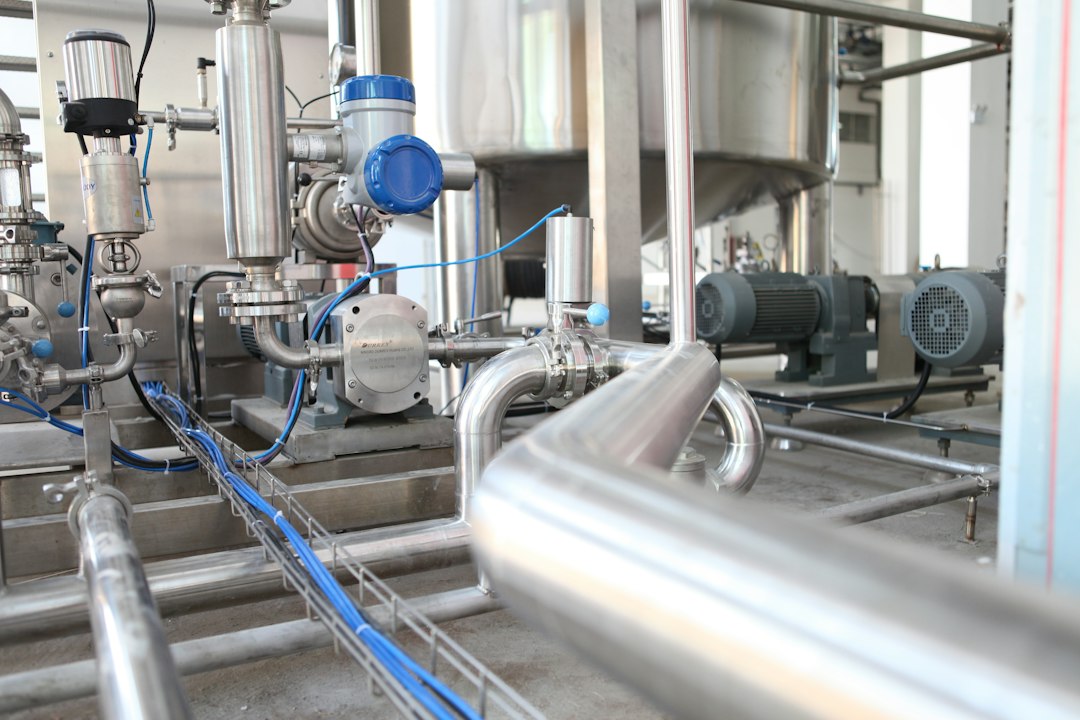
Pipeline Architecture and Digital-Twin Monitoring
HY4Link’s roughly 230 km route threads through four jurisdictions — Belgium, Luxembourg, France and Germany — linking the hydrogen import capacity of Antwerp and Zeebrugge to demand centres in French heavy industry. The project secured Project of Common Interest (PCI) status in November 2025, unlocking streamlined permitting and potential EU financing instruments. Operationally, the pipeline deploys digital-twin and AI-based monitoring systems to manage pressure integrity and detect anomalies across the cross-border network in real time — the same class of data-driven tooling that vessel operators are beginning to apply to AI-assisted fleet routing and methanol bunkering schedule optimisation.
Why This Matters for Green Methanol and Maritime Fuel
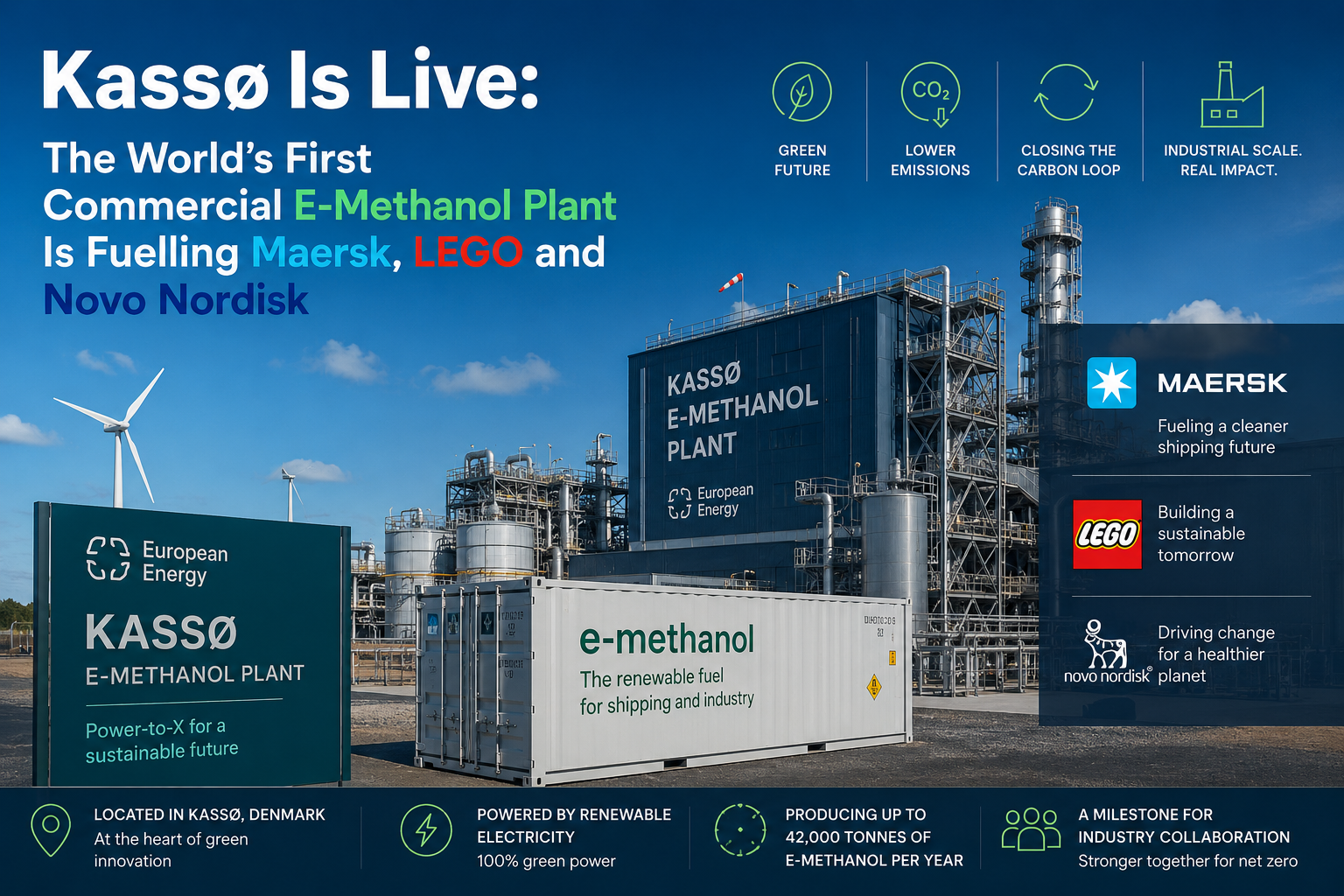
Green methanol is synthesised by combining green hydrogen with captured CO₂. The economics of e-methanol therefore hinge directly on the delivered cost and reliable availability of low-carbon hydrogen feedstock. A dedicated, high-capacity hydrogen backbone connecting major import hubs to synthesis facilities is precisely the infrastructure missing from most European e-methanol project proposals today. With carriers such as Maersk having already commissioned methanol-fuelled vessels and the Kassoe facility in Denmark among the reference projects defining what industrial-scale e-methanol production looks like, the feedstock pipeline question is no longer theoretical.
FuelEU Maritime, which mandates a stepwise reduction in the greenhouse-gas intensity of energy used on board EU-flagged and EU-calling vessels, adds regulatory urgency. Methanol pathways that draw on pipeline-delivered green hydrogen rather than on trucked or on-site electrolysis hydrogen offer a more scalable, lower-logistics-cost route to compliance. HY4Link, by aggregating import volumes from Antwerp and Zeebrugge — two of northwest Europe’s largest LNG and prospective hydrogen import terminals — provides exactly that aggregation function.
Efficiency Context and the Role of Pipeline H₂
The standard objection to e-fuels in road transport — that the well-to-wheel efficiency of an e-fuel pathway (around 16%, per ICCT analysis) compares poorly with battery-electric vehicles (around 72%, per the same ICCT figures, making BEVs over four times more efficient) — applies with less force in maritime contexts. Deep-sea shipping, with its energy density requirements and refuelling infrastructure constraints, is precisely the sector where combustion fuels retain a structural advantage over batteries. HY4Link’s hydrogen, once synthesised into methanol, feeds into that hard-to-electrify segment rather than competing head-to-head with BEVs.
The pipeline’s AI-monitored digital-twin architecture also signals the direction of travel for the broader e-methanol value chain: tighter sensor integration, predictive maintenance, and eventually the kind of real-time supply-demand matching that would allow bunkering terminals to schedule methanol deliveries in step with vessel arrival patterns — reducing demurrage and improving the economics of green fuel adoption at scale.
Sources
- India’s first port-based E-Methanol plant at Kandla
- Hamburg advances green methanol bunkering plans as Baltic ports test hydrogen fuels
Featured image via Unsplash.
This is not an official site. It is published by a private company and does not emanate from any public authority, institutional programme, government department or research organisation. It represents none of them and speaks for none of them in any capacity.
Nature of the content. Articles are documentary summaries drawn from cited public sources. They may contain inaccuracies, omissions or information that has since become outdated. No financial, technical, legal or investment advice is provided.
Always verify against primary sources. For any information concerning a public programme, a regulation or an institutional project, only the publications of the competent authority are authoritative.
© 2026 BESS Energie SRL · BCE 0698.949.732 · info@bess.be





Leave a Reply