

Electrolysis and Renewable Hydrogen Under RED III
RED III establishes binding criteria for renewable fuels of non-biological origin (RFNBOs)—the regulatory term covering green hydrogen produced via water electrolysis powered by renewable electricity—and their derivatives, including e-methanol. The directive mandates additionality, temporal correlation, and geographical correlation for the electricity used in electrolysis to qualify as renewable, ensuring that hydrogen production genuinely drives new renewable-energy capacity rather than displacing existing clean power. For e-methanol synthesised from green hydrogen and captured CO₂, these rules govern the entire upstream hydrogen supply chain.
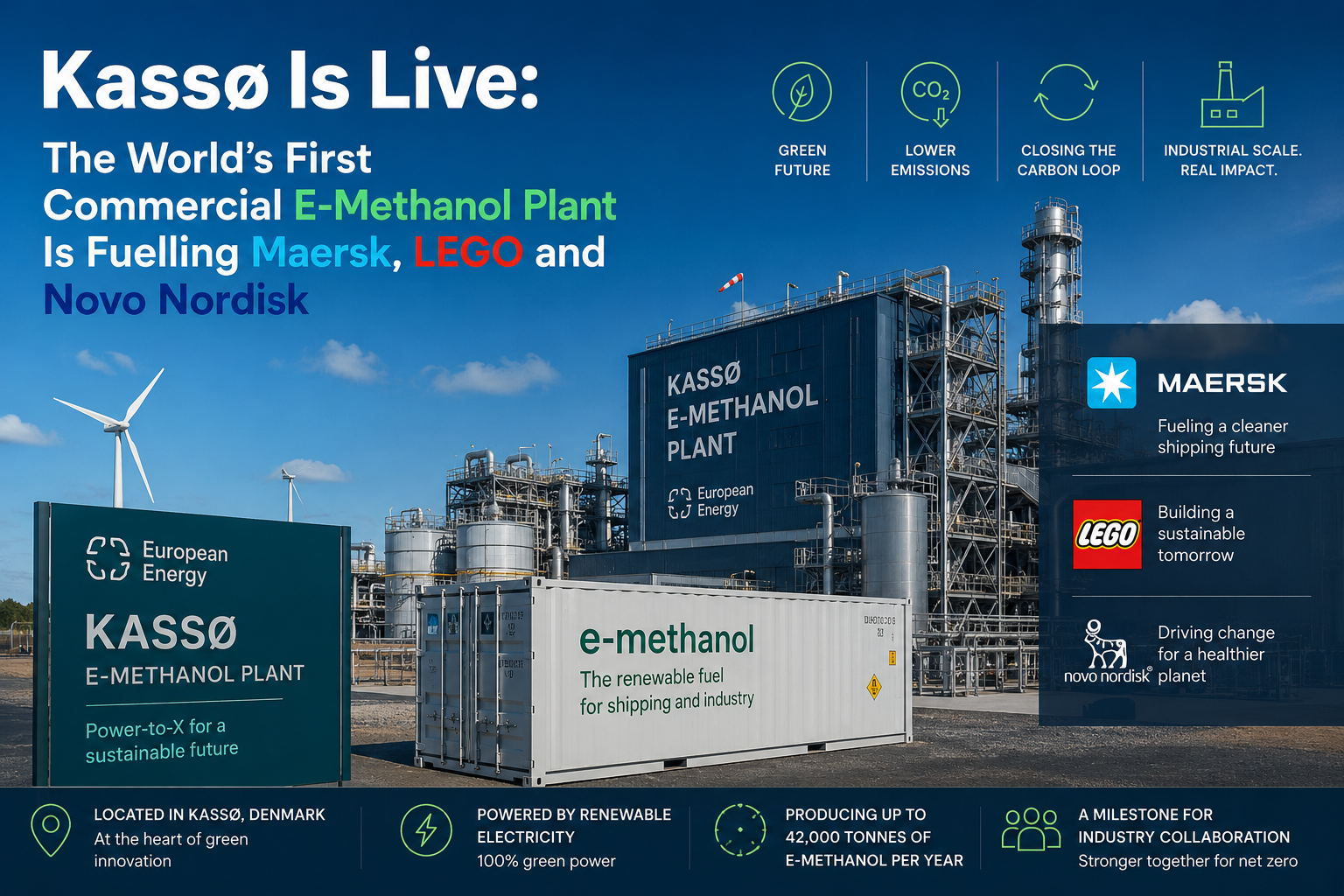
Germany’s ratification brings these requirements into force domestically, affecting planned projects such as the Kassø e-methanol facility in Denmark and similar plants eyeing German ports as offtake hubs. Operators must now demonstrate compliance through rigorous documentation and certification, adding administrative and capital costs to already capital-intensive electrolysis and synthesis processes. As maritime operators like Maersk scale methanol-fuelled fleets—some equipped with the MAN Energy Solutions B&W ME-LGIM dual-fuel engine derived from the Horse D20 platform—securing RED III-compliant e-methanol becomes critical to meeting FuelEU Maritime’s greenhouse-gas-intensity targets from 2025 onward.
Implications for E-Methanol Economics and Maritime Decarbonisation
The tighter sustainability criteria under RED III will likely widen the green premium between fossil methanol and certified e-methanol, even as learning curves drive down electrolyser and reactor costs. Producers must invest in renewable power-purchase agreements, grid-connection studies, and carbon-accounting systems to satisfy both RED III and FuelEU Maritime audits. At the same time, AI-driven fleet route and bunkering optimisation tools are beginning to help methanol-fuelled vessels minimise fuel consumption and plan refuelling around ports with certified e-methanol stocks, marginally improving the business case for early adopters.
NOW GmbH, Germany’s national hydrogen and fuel-cell organisation, has published factsheets on EU renewable-fuel legislation to guide stakeholders through the RED III and ReFuelEU Aviation frameworks, underscoring the cross-modal nature of synthetic-fuel regulation. For the maritime sector, RED III’s hydrogen rules are the foundation: without compliant green hydrogen, e-methanol cannot count toward FuelEU Maritime’s pooling mechanisms or generate tradable compliance credits.
Next Steps for Producers and Shipowners
Renewable fuel operators should review RED III’s certification pathways and begin aligning electrolyser procurement and power contracts with additionality requirements well ahead of 2030. Shipowners investing in methanol-capable tonnage must secure long-term offtake agreements with producers able to demonstrate RED III compliance, or risk fuel-quality disputes and regulatory penalties under FuelEU Maritime. As member states transpose the directive into national law, harmonisation across borders will remain a watch item, particularly for cross-border hydrogen pipelines and shipping lanes spanning multiple jurisdictions.
Sources
- German cabinet passes EU RED III – Argus Media
- Updates about RED III and ReFuelEU Aviation in Germany – Energy Regulation Solutions
- NOW factsheets on EU legislation for renewable fuels – NOW GmbH
- What EU RED III compliance for biofuels means for renewable fuel operators – RSB
Featured image via Unsplash.








Leave a Reply